

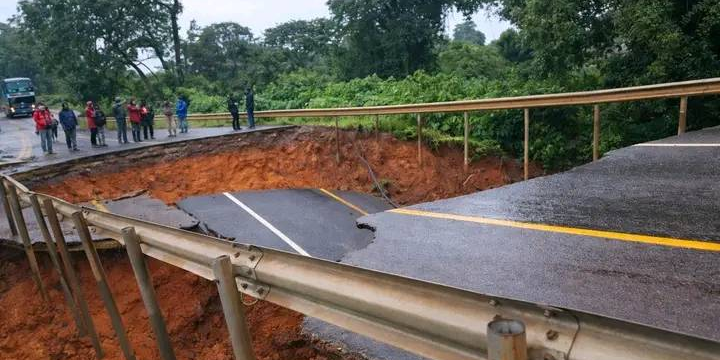
Bridge Collapse Disrupts DRC’s Key Copper Export Route
Flooding Collapses Bridge Near Zambia Border, Disrupting Congo’s Major Copper Export Route
Severe flooding has cut off one of the Democratic Republic of Congo’s most important copper export routes after a bridge collapsed near the country’s southern border with Zambia.
The damage has disrupted the movement of trucks carrying copper from the Central African copperbelt, a critical source of supply for global markets.
The collapse occurred just south of the border crossing at Kasumbalesa Border Post, the busiest crossing point between the two countries and a vital gateway for copper exports leaving Congo.
Authorities confirmed that the damage has interrupted traffic in both directions, affecting the flow of trucks transporting minerals and other goods between the two nations.
The Zambia Revenue Authority advised transporters to use alternative routes while repairs are underway, warning that the disruption has significantly affected movement to and from the border.
Meanwhile, the Road Development Agency said emergency work had begun to restore access to the corridor.
Officials estimate that temporary access could be restored within about 48 hours, depending on weather and construction conditions.
Footage broadcast by the state broadcaster Zambia National Broadcasting Corporation showed the bridge completely washed away by floodwaters.
A Critical Copper Supply Route
Although the Democratic Republic of Congo and Zambia share several border crossings, the Kasumbalesa route handles the largest share of cross-border traffic.
Long lines of trucks carrying copper and cobalt frequently stretch for many kilometers as drivers wait to clear customs.
The disruption underscores the vulnerability of the region’s logistics infrastructure. Congo is the world’s second-largest producer of copper and the largest supplier of cobalt, making reliable export corridors essential for global supply chains.
Pressure to Develop Alternative Corridors
The incident has once again highlighted the need for additional transport routes from the Central African copperbelt to global markets.
One major initiative is the Lobito Corridor, a railway and logistics network designed to connect mines in Congo and Zambia to the Atlantic port of Lobito in Angola.
The project has received backing from both the United States and the European Union as part of efforts to strengthen critical minerals supply chains.
China is also investing heavily in alternative infrastructure. Beijing is supporting the modernization of the TAZARA Railway, which links Zambia’s copperbelt to the port of Port of Dar es Salaam on the Indian Ocean. The project is expected to cost nearly $1.4 billion.
Together, these competing infrastructure projects reflect the growing global importance of Central Africa’s mineral resources and the strategic race to secure reliable export routes.